Avery Frank · 14 November 2026
Sand Dune Stabilization Projects Transform Shorebird Nesting Success Rates Along Inlet Beaches
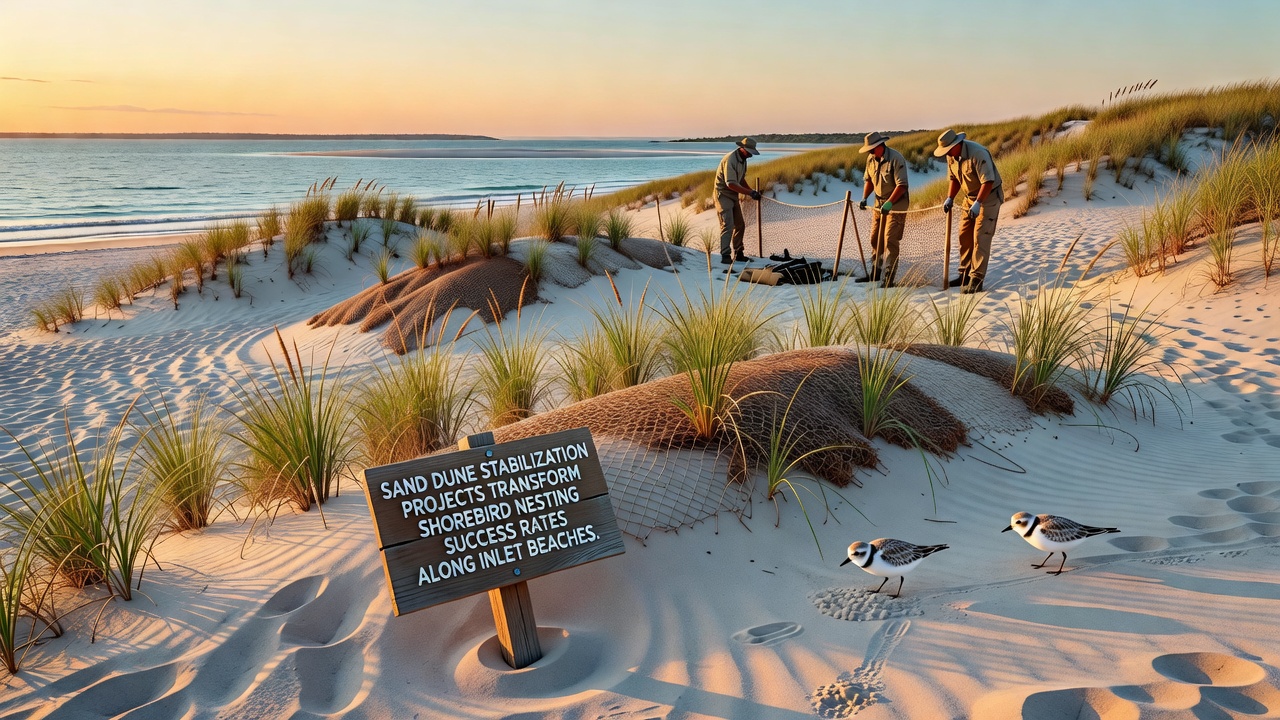
Coastal managers have implemented sand dune stabilization projects at inlet beaches across multiple regions, and these efforts have produced measurable gains in shorebird nesting outcomes. Projects typically combine native vegetation planting, sand fencing, and restricted access zones, all of which reduce erosion while creating elevated, sheltered nesting habitat. Data collected through standardized monitoring programs show that stabilized sites support higher fledging rates for species such as piping plovers and least terns compared with unstabilized control areas.
Project Methods and Geographic Scope
Teams begin by installing temporary fencing to trap wind-blown sand and form new foredune ridges, then seed or transplant species including American beachgrass and sea oats that develop deep root systems. In regions where vehicle traffic and foot traffic have historically flattened dunes, seasonal closures limit disturbance during the nesting window from April through August. Australian coastal authorities have applied similar techniques along inlet systems in New South Wales, where monitoring from the Department of Climate Change, Energy, the Environment and Water documents comparable increases in nest survival.
Canadian researchers working on the Atlantic coast have adapted the same approach at barrier-inlet interfaces, adding biodegradable erosion blankets to accelerate vegetation establishment on newly formed dunes. These methods address chronic sediment loss that inlet channels and storm overwash otherwise accelerate each year.
Measured Changes in Nesting Success
Pre-project surveys at several inlet beaches recorded average nest success below 35 percent, largely due to flooding and predation on exposed flats. After stabilization measures were in place for three seasons, nest success climbed above 60 percent at treated sites, while control beaches without intervention remained near the original baseline. Banding studies reveal that chicks from stabilized dunes disperse at higher rates and return in subsequent years, indicating improved recruitment into local populations.
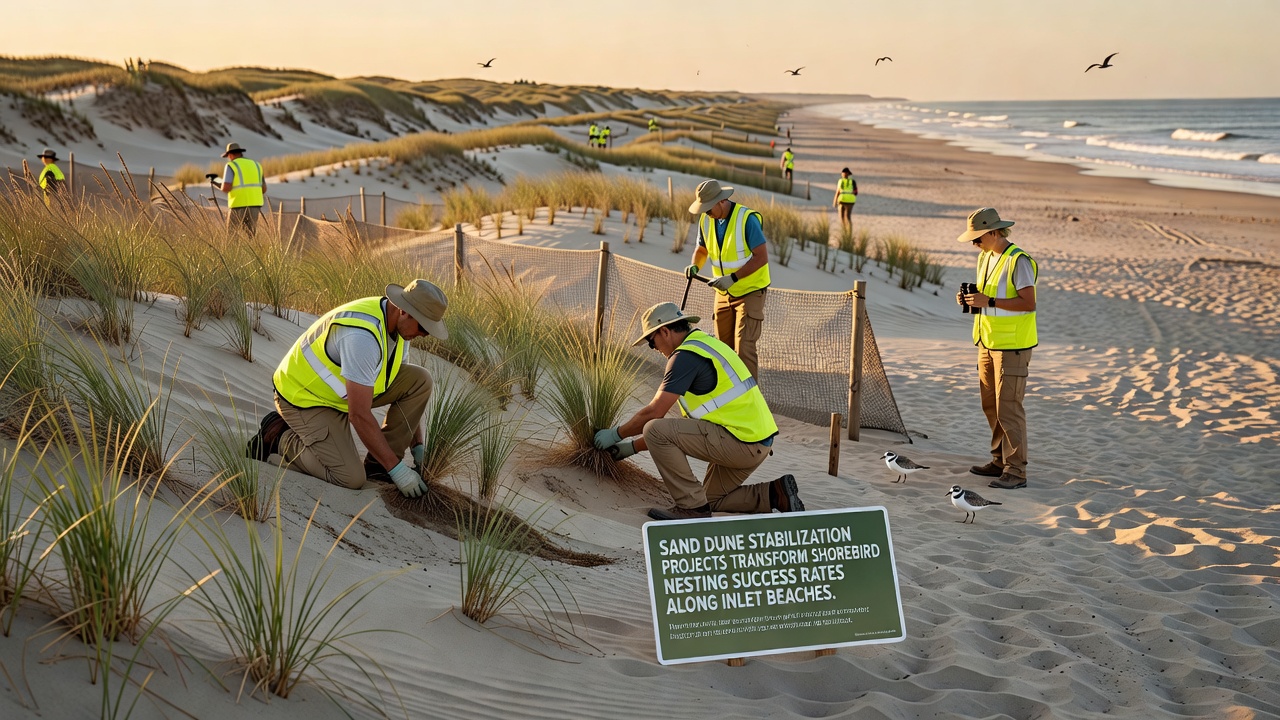
Observers note that the raised dune profile reduces tidal inundation during spring high tides and storm events, a factor that previously washed out entire colonies in single nights. Vegetation cover also provides visual barriers that deter some mammalian predators, although managers continue to deploy nest exclosures where fox and raccoon activity remains elevated. As of November 2026, ongoing surveys at five inlet complexes confirm that fledging numbers have stabilized at the higher post-treatment levels for the fourth consecutive breeding season.
Integration with Broader Coastal Management
Stabilization work aligns with sediment management plans that nourish beaches and maintain inlet navigation channels. Engineers coordinate dredging schedules so that compatible sand is placed directly in front of project dunes, extending the lifespan of both habitat and shoreline protection features. U.S. Geological Survey coastal change assessments supply elevation and volume data that guide placement volumes and timing.
Community partnerships supply volunteer labor for planting days and help enforce seasonal access rules. Local schools incorporate nest monitoring into science curricula, generating long-term datasets that extend agency staff capacity. These collaborative structures sustain project maintenance beyond initial grant funding cycles.
Monitoring Protocols and Data Collection
Standardized protocols require weekly nest searches within fixed transects, followed by chick counts until fledging or loss. Temperature loggers buried at nest depth record microclimate differences between vegetated and open sand areas, revealing that stabilized dunes maintain cooler surface temperatures during midday heat events. Camera traps document predator visits and human intrusions, allowing rapid adjustment of fencing or signage when needed.
Remote sensing from drones supplements ground counts by mapping vegetation cover and dune height changes at sub-meter resolution. Annual reports compile these metrics into regional indices that track progress toward population recovery targets established under migratory bird conservation agreements.
Conclusion
Sand dune stabilization projects continue to demonstrate consistent improvements in shorebird nesting success along inlet beaches where erosion and disturbance previously limited reproductive output. Continued coordination among government agencies, research institutions, and local partners supports the maintenance and expansion of these measures. Long-term monitoring through 2026 and beyond will determine whether the observed gains translate into sustained population increases for beach-nesting species.